Travel Tips

Climate

Generally dry and hot with cool nights/mornings June-­October and mid­-December­-March; short rains November to mid­-December; long rains April­-May but the seasons can vary. The coastal strip is hot and humid all year round. Temperatures on Mount Kilimanjaro and Meru drop to below freezing.

Clothes

Pack lightweight, washable clothes plus a sweater for early morning game drives, as well as a sun hat, sunglasses and sunscreen. Long sleeves and trousers in light­colored fabrics help discourage insect bites. Brightly colored clothing may alarm the animals. You can buy clothes in Dar, Zanzibar and Arusha if necessary. Shorts are acceptable only while on safari for both men and women. Women should bring a wrap to cover legs in villages and towns as revealing clothes can cause offense. On the beach and within the confines of beach hotels normal swimwear is acceptable (but not nudity).

For climbing on Kilimanjaro or Meru, take thermal underwear, light layers, sweater, rain jacket, good socks and sturdy boots.

Electricity

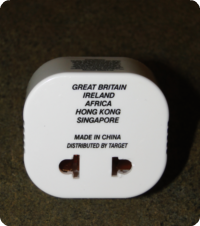
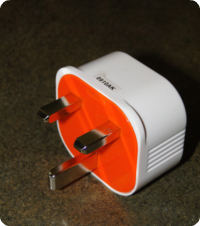
A 3 rectangular pin UK plug adapter is required to use electrical appliances including video cameras and digital cameras. The plug adapter is placed onto your appliance plug so that it will fit into the 3 rectangular pin electrical sockets. Tanzania electrical sockets are identical to those found in the United Kingdom.
The electrical voltage in Tanzania is 220V while the electrical voltage in the United States is 120V. If you have a dual voltage appliance or a universal power supply capable of operating safely with either 120V or 220V, all you will need is the plug adapter mentioned above. Most newer laptops, digital cameras and video cameras come equipped with a dual voltage power supply. Check to make sure that the input reads 100V – 240V or 120V – 240V.

If you do not have a dual voltage power supply, then in addition to the plug adapter, you will need to purchase a transformer/converter.

For more information, please visit http://www.kropla.com/electric.htm

Plug Adaptor (front)
Plug adaptor (back)
Plug adaptor (back)


Please be aware that many of the lodges in Tanzania do not operate their electricity generators 24 hours a day. Some lodges turn off their generators after dinner until just before dawn. Please inquire upon arrival at each lodge as policies differ widely. It is always a good idea to be prepared with one or two extra batteries for digital cameras, camcorders and laptops.

Gifts

Don’t indiscriminately hand out pens, money and sweets– it just encourages begging. As anywhere, gifts should be given as a true expression of friendship, appreciation or thanks.

Health

Yellow fever is required for ALL persons from yellow fever endemic countries/regions. All individuals in transit for 12 hours or more and/or who leave the immediate airport vicinity in a yellow fever endemic area are required to get vaccinated. All individuals from yellow fever endemic regions traveling by way of air, marine and land are required to get vaccinated. The Ministry of Health and Social Welfare of the United Republic of Tanzania has reinstalled HEALTH SURVEILLANCE DESKS in all borders, ports and international airports. PLEASE CARRY YOUR HEALTH CERTIFICATES WITH YOU WHEN ENTERING TANZANIA. Malaria is endemic but is preventable: use insect repellent, cover up at sundown, sleep under a mosquito net and take anti­malaria prophylactics as advised by your doctor. Bring prescription medicines, spare glasses, contact lenses and solution as well as sunscreen, a first aid kit, cream for bites/stings and diarrhea remedy. Drink only boiled or bottled water, bottled or canned drinks. Avoid ice cubes and salads. HIV/AIDS is widespread. See Medical Tips.

Immigration

Visas are required. Visas cost $50 USD per person ($100 USD per person for US Citizens) and can be obtained on arrival but you may wish to get them in advance. See Visa Information.

Insurance

Take out travel insurance to cover loss of baggage or valuables, personal accident and medical expenses. Access 2 Tanzania has teamed with Travelex Insurance Services to offer a selection of travel insurance options. All Travelex policies offer primary coverage - meaning they pay first, not your personal insurance policies. Check out Travelex Insurance Services to compare policies.

Language

English is widely spoken in the cities, but not spoken much in the villages. A few words of Swahili can be useful and will be appreciated greatly by locals.

Money

Major foreign currencies – particularly USD ­and traveler’s checks are accepted and are convertible at banks and bureau de changes in the main towns and tourist areas. In general, credit cards are of little use in Tanzania. Credit cards are not widely accepted and when they are accepted, they carry poor exchange rates and are subject to substantial fees. Some banks in Arusha, Dar es Salaam and Moshi offer ATM facilities against international credit cards, but again the rates are typically poor and the amount that can be withdrawn is limited. ATMs are not available at all elsewhere. Don’t change money in the street.

On Safari

Distances in Tanzania are vast, and travel by road can be wearing. Keep your distance from animals and be quiet to avoid distressing the wildlife. Follow instructions of your guide. Don’t leave your vehicle in the parks except in designated places. Keep to recognized tracks to avoid damaging vegetation.

Personal Expenses

As noted in your contract drinks with meals, gratuities, laundry, select meals (where noted) and other personal expenses are not included in your package. A good starting point to calculate your cash needs is $20 per person per day. We have compiled this list of expenses so that you can better budget your incidental costs. Costs are average.

Soda and Bottled Water $1 per drink
Beer and Wine $2-3 per drink
Mixed Drinks $4-5 per drink
Laundry Service at accommodations $1-3 per item of clothing (price varies based on item)
Lunch (Arusha, Zanzibar or Stone Town) $8 per person (without drinks)
Dinner (Arusha, Zanzibar or Stone Town) $15 per person (without drinks)
Aviation & Safety Fees (at all Tanzanian airports) $5 per person (Aviation) and $1 per person (Safety)
Gratuities:

~Safari Guide

(# of people in vehicle / $ tip per day of safari)

1 person / $15 per day for group

2-4 people / $20 per day for group

5-7 people / $30 per day for group
~Kilimanjaro Guides & Crew Please see Kilimanjaro Tips below

~Cook on Classic Camping Safari

(# of people in vehicle / $ tip per day of safari)

1 person / $8 per day for group

2-4 people / $10 per day for group

5-7 people / $15 per day for group
~ Activity Guide (for a hike, canoe, etc...) $10-20 per group
~ Service Tip at the lodges (central tip box) $2-4 per person per day

Safari Guide tips are preferred in USD. Tanzania shillings are preferable for workers who live a distance from town (such as those at lodges and camps).

Photography

Bring film and batteries for your camera with you. Protect your cameras from dust and keep equipment and film cool. It is courteous to ask permission before photographing local people. If you intend to take a lot of people pictures, it can be nice to bring an instant camera with you so that you can leave a picture with the people you photograph. Excellent binoculars are a must. If you do not have binoculars, Access 2 Tanzania can supply your car with a pair upon request and free of charge.

Security

Tanzania is generally a safe country, but don’t invite temptation. Keep an eye on your belongings. Don’t walk in the towns or cities at night – take a taxi. Don’t carry cameras or large amounts of cash; beware of pickpockets. Use hotel safety deposit boxes to safeguard valuables and obtain a receipt. Leave valuable jewelry at home.

Shopping

The tourist areas and hotels sell a wide range of souvenirs, jewelry and trinkets. Don’t be afraid to haggle at roadside stalls.

Tipping

Safari Tips

Not obligatory, but a tip for exceptional service would be appreciated. A minimum suggested tip of $8-­12 per person / per day to your driver guide is usually appropriate. If you are on a camping safari, the suggested minimum tip for your cook is $6-­10 per person / per day. At most lodges/camps there is a tip box at the front desk. We recommend that you use the tip box instead of tipping individuals so that everyone who made your experience enjoyable can share, even those behind the scenes. At most lodges and camps, someone will carry your luggage and you might feel compelled to tip them separately but that is up to you. Regarding other activities such as a canoe safari, bike ride, cultural visit, etc. each particular guide or company has been paid by Access 2 Tanzania but in some cases you might feel compelled to offer a tip for exceptional service. In that case, it is purely a personal decision, but you might think of something in the range of $5 to $20 per group depending on the amount and level of service.These are general guidelines and you should feel free to tip as you see appropriate. Ask your guide in other instances if you are not sure whether to tip.

Kilimanjaro Tips

  • Tipping recommendations from the trekking group (not per climber):
    • Guides: $15/day
    • Assistant Guides: $10/day
    • Cook: $10/day
    • Porter: $5/day
  • Expect 1 guide per 2 hikers, 1 assistant guide per 3 hikers, and 1 cook per 8 hikers. Porters as follows:
    • 2 porters per hiker on the 5-day Marangu Route and Mt. Meru (minimum of 4 porters)
    • 3 porters per hiker on a 6 or 7-day trek (minimum of 5 porters)
    • 4 porters per hiker on the 8-day Lemosho Route (minimum of 8 porters)
    • Sometimes extra porters are required based on the weight of the luggage.
  • Budget $200-250 per hiker for tips for a 6-day trek.

Preparation:

Please plan ahead of time to bring tip money with you on the mountain. You will need to discuss this with your climbing group so everyone is prepared. Tipping is best done at camp on the last morning after breakfast and before you leave camp. The following list will prepare you for this process.

  • small denominations of Tanzanian shillings (or US dollars); tipping in shillings is preferred
  • rubber bands (or envelopes)
  • small notebook and pen
  • calculator and the current exchange rate; Tsh to dollars and dollars to Tsh (i.e. if 1.00US$ = 1,325tsh than 1,000tsh = .75US$ apprx)

On the Mountain:

At the start of your guide will give you a complete list of names for your mountain crew. If this is not given to you please ask for it at the gate before you start trekking. One person from your climb group should collect the tips and divide them as decided by the group. If individual clients want to tip particular crew members additional money they can add it to the group amount or hand it directly to the crew member. Put each crew member’s tip in an envelope, or fold and band, with a note indicating the crew member’s name. After breakfast on the morning of your last day on the mountain assemble your crew and thank them individually by calling them from your roster sheet and handing them their tips individually. Return the crew list to your lead guide.

After the Trek:

Gifts: Guides and porters also appreciate your warm clothing, shoes, and packs. You may want to bring some older clothing items just for this purpose.

Celebration: You are also welcome to invite your guides back to your hotel for dinner (on you) as a thank-you in addition to their tip.

Time

3 hrs + GMT

Cultural Tips

African cultures are nearly opposite to Western cultures in many ways. When in a rural village, it is important to respect the local culture so we will always be welcome. Most of the Tanzanians you will encounter in a village have had little exposure to foreigners. In all cases, communication is a great path to mutual understanding and if you should get into any misunderstandings or run into any problems, feel free to talk with your guide.

Society And Social Obligations Vs. Individuality And Independence

There are strong social obligations in Tanzania that are opposite to the independence prized in many Western countries. Greetings are very important, and spending time socializing is also valued in Tanzania. Tanzanians are generally very accommodating and helpful to outsiders. Your friends, local family, and local co­workers will often accompany you and want to help you in any way possible. As a guest, some people may want to serve you. Be aware that this may make you feel uncomfortable, but their goal is to make you as comfortable as possible.
Tanzanians are incredibly friendly and welcoming people and do not be surprised to get invited frequently to peoples’ homes for “chai” (tea). They will offer you drinks or food. You may be considered rude if you refuse but of course do not consume things you are uncomfortable with. Also understand that it is generally culturally unacceptable to refuse a gift. Whoever invites people for drinks or a meal generally pays for everything instead of splitting the bill. If other people pay for your drinks or meals do not be surprised.
There is a community concept in Tanzania that people who have something should share it with their friends and family, and that property is ours rather than mine or yours. This is in sharp contrast to Western values of me and mine. Be prepared that people will ask you to give them things, pay for things, or buy things. Western people often interpret this as people trying to take advantage of them. There is simply a cultural difference of sharing whatever you have coupled with an assumption that you have a lot to give. This is opposite to Western culture where we value independence and often do not like to ask for help or things especially from others. It is best to say “no” if that is how you feel. Realize, too, that Tanzanians often say “no” to each other as well. When they ask for something, such as for help sending them to school, your camera, or for you to buy something from them, they are not really expecting you to say “yes,” they are just trying their chances. Feel free to say “no” without an explanation. A simple, “Siwezi” (I can’t) or “Sina” (I don’t have any) if someone asks you for something you are uncomfortable giving, or “Asante” (Thank you) while shaking your head and smiling if someone asks you to buy something you don’t want, is a culturally appropriate response. As a result of poverty, many people do genuinely need help, but you should talk with your guide before providing assistance to someone. It is your choice to help an individual, but keep in mind it can create jealousies and set precedents for future expectations. Try to be sensitive to the economic disparities and try to keep symbols of wealth such as cameras, walkmans, jewelry, or large amounts of local currency out of public view.

Time

While in Western societies time makes things happen, in Tanzania people generally make things happen. This means that meetings which are scheduled for 10 am often do not start until everybody gets there at 11:30 am. Smaller buses leave when all the seats are full, rather than on a set schedule. There is an increasing effort here to try to be more on time, but be aware that people may interpret time differently than you. “Sasa hivi” (right now) could mean an hour from now. People are not trying to be disrespectful, time just has a different meaning.

Privacy

While privacy is very important in Western cultures, it is practically non­existent in Tanzania. This means that people may openly stare at you, and may ask questions that seem personal, such as “are you married, any children, what religion are you?”

Gender Relations

Men and women are generally not friends in Tanzanian society. You may of course become friends with people of different genders, but be aware that if you spend a lot of time with any individual of the opposite sex, the community will assume you are having an affair. Public displays of affection between members of the opposite sex will be very offensive to the rural community. On the other hand, do not be surprised to see men holding hands in friendship. Women in particular may experience badgering from men including frequent marriage proposals. Wearing a wedding ring and telling people you are married goes a long way.

Clothing

Tanzanians have a very different dress code than westerners, which we need to respect. In urban areas western dress is appropriate, although generally throughout Tanzania shorts are only worn by primary school­aged boys. For an adult, wearing shorts is culturally equivalent to walking around in underwear. In villages, men should wear long pants and shirts with collars and women should wear skirts or lightweight dresses that go below the knee with t­shirts or short sleeve shirts that cover shoulders. Pants are not appropriate for women in the village. Sandals are appropriate when walking around, but you might bring a pair of nice closed shoes for going to official meetings or schools. If in doubt, choose the culturally sensitive, conservative approach. If you dress shabbily, it may be interpreted as a lack of respect for the community.

Polite Behavior

Aside from general polite behaviors such as not swearing, smoking, or using other drugs considered offensive in many societies, there are special behaviors that are deemed respectful in Tanzanian society. Greetings are very important. A good start is: “Habari yako?” (How are you), or “Hujambo” and answer “Nzuri” (Fine/good). Give and take things and eat with your right hand only when ever possible. If you are a woman and choose to wear a kanga over a skirt as local women do, the local community will be very happy. Also be aware that sniffing food is considered rude. Feel free to try a taste of something, and press fruit to see if it is ripe rather than smelling it. Be prepared that many people may call you “mzungu” (westerner) if your skin is white, may not believe you do not come from India or Asia if your features suggest such an ancestry, or may believe you know Swahili if your skin is black. They are not trying to insult you and racial terms do not have the same connotations in Tanzania as they do in the west.


Share this page with others!
book_trip

Tanzania Vacation: Explore Tanzania!

Explore Tanzania and plan your Tanzania vacation. Click the map to get started!

Tanzania Vacation

project_sadwaji_logoWe know Tanzania. After living in Tanzania for 2 years as a Peace Corps Volunteer, Brian Singer started Project Zawadi, an NGO, to support orphaned and other vulnerable children.

Using his business background and local connections, he and his wife, Karen, joined forces with Michael to start Access 2 Tanzania. We know Tanzania.

Book your Tanzania vacation with us.

Contact Information U.S.A.
866-589-6116
Karen@Access2Tanzania.com
Skype: sales.access2tanzania

Tanzania
+255-732-979-903 

www.Access2Tanzania.com
Locations U.S.A
Access 2 Tanzania LLC
253 Duke Street
Saint Paul, MN 55102

Tanzania
Access 2 Tanzania LTD
PO Box 10955
Arusha, Tanzania
OwnersU.S.A.
Brian Singer
Karen Stupic

Tanzania
Michael Musa